
Construction / Project Engineering — Planning & Scheduling
Logic, duration, and the critical path—turn scope into a time model you can defend.
Introduction
Planning defines what must happen; scheduling places it on a timeline with dependencies and resources. Critical Path Method (CPM) finds the longest path of driving activities; float shows where delay may not slip the end date. Gantt charts communicate the programme; network diagrams show logic. Good schedules align procurement, inspections, and weather risk windows.
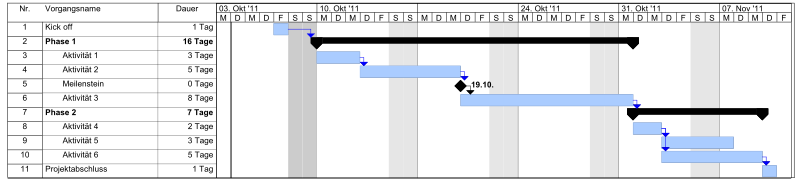

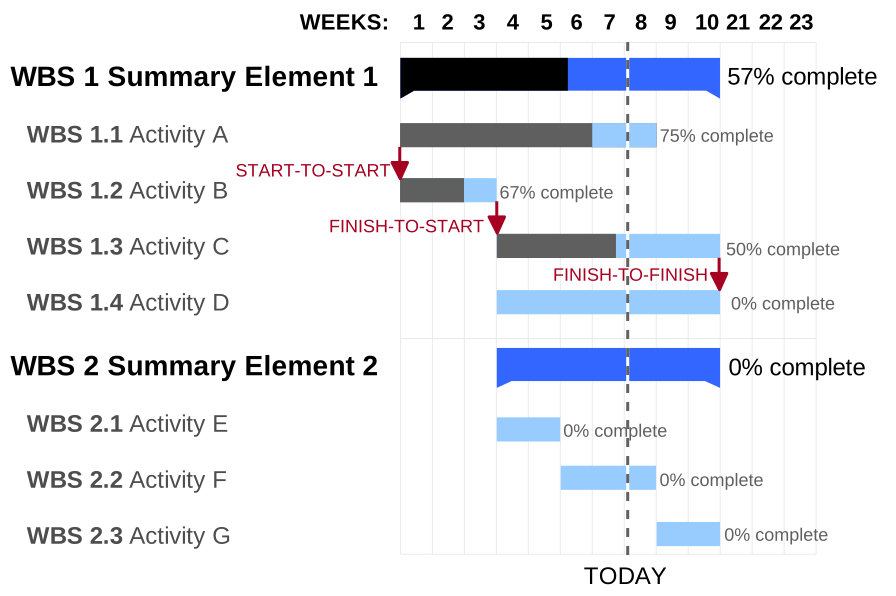

What scheduling delivers
- Baseline programme — agreed sequence and dates for contract reference.
- Look-ahead windows — near-term coordination of trades and interfaces.
- Delay analysis input — as-built logic and impacts for EOT claims.
- Resource smoothing — peak labour and plant within site limits.
Contracts and practice (South Africa)
Programme submissions, revisions, and float ownership follow the employer’s contract (often JBCC-based). Agree reporting period, % complete rules, and whether schedules are resource-loaded. Align calendar with regional working norms and any seasonal restrictions.
Notation (common)
- FS / SS / FF — finish-to-start, start-to-start, finish-to-finish links.
- TF / FF — total float and free float on an activity.
- Lag — mandatory wait between predecessor and successor.
- WBS — work breakdown structure feeding activity IDs.
Examples in practice
- Structural frame: follow-on trades gated by inspections and cure times.
- Services: coordination of ceiling closure with MEP testing.
- External works: weather windows and seasonal planting.
- Commissioning: sequential energisation and handover milestones.
Calculator — serial duration
Enter duration A and duration B in days for two tasks in series. Output is A + B—not project duration unless this is the only path.
Two linked tasks (illustration)
Serial duration T = DA + DB for two finish-to-start activities (same calendar).
Key terms
- Critical path
- Longest driving path through the network; zero total float on that path in basic CPM.
- Milestone
- Zero-duration event used for approvals, handovers, or sectional completion.
Software and scheduling
Enterprise scheduling uses CPM engines, calendars, and comparison to baseline. Examples (official sites):
- Bentley SYNCHRO — 4D construction modelling and scheduling.
- Microsoft Project — desktop scheduling and linking to Microsoft 365.
- CCS — Candy project control (common in Southern Africa).
- Procore — construction management with schedule integration.
No product endorsement—use the tool your contract and employer mandate; export formats and revision history must support dispute resolution if needed.
Diagram sources
Educational figures. Files in Images/planning-scheduling/ were downloaded from Wikimedia Commons into this repo (not copied from other topic folders). Confirm licence on each Commons file page before reuse.